Why Do Pipes Burst? The Real Causes (And How to Prevent Them)
Most burst pipes don’t come out of nowhere. By the time water is flooding your laundry or running down a wall, something has usually been building for a while.
Understanding why pipes burst can help you figure out whether the rest of your system is at risk and give you a realistic picture of what to watch for.
Could This Happen to Your Home?
Before diving into causes, a few quick questions that help narrow down your risk profile:
- How old is your home? Properties built before the 1980s are significantly more likely to have ageing steel or copper pipework that’s been degrading for decades. Older Ipswich suburbs have a high proportion of these homes.
- Do your pipes knock or bang when you turn off taps? That’s water hammer, and it’s a warning sign worth taking seriously.
- Do you have large established trees close to the house or near where your supply line runs from the street? Root intrusion is more common than most homeowners expect.
- Has your water pressure always felt unusually strong? Chronically high mains pressure is one of the leading causes of joint and fitting failure, and most people never know their pressure is too high until something gives.
The Real Causes of Burst Pipes
1. Corroded or Ageing Pipes
This is the most common cause of burst pipes in older Ipswich properties, and it’s the one that’s easiest to miss because it happens so slowly.
Galvanised steel pipes were standard in homes built before the 1970s, and they corrode from the inside out. Minerals in the water react with the metal over decades, gradually building up rust and scale deposits that narrow the pipe’s internal diameter and weaken the pipe wall. By the time a burst occurs, the steel has often been compromised for years.
Copper pipes have a longer lifespan, but they’re not immune. Pitting corrosion in copper pipes is particularly insidious because it produces small pinhole leaks that can go undetected inside walls for months before a more significant failure follows.
Polybutylene (poly) pipe, common in homes built through the 1980s and 90s, has its own problems. It degrades when exposed to chlorine in treated mains water over time, becoming brittle and prone to cracking.
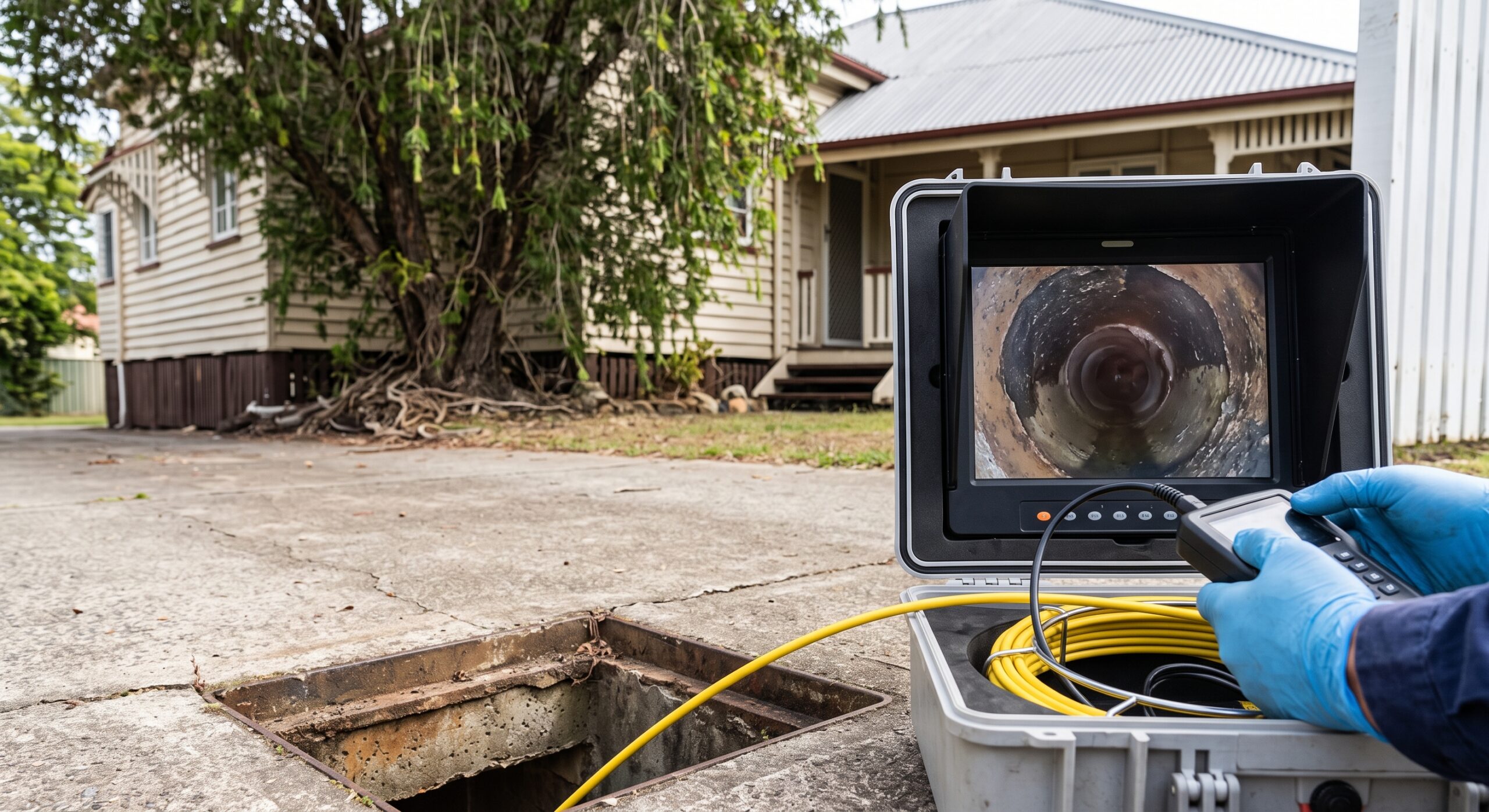
Prevention: If your home is 30–40 years old or older and you’ve never had the pipework assessed, it’s worth having it done. A CCTV pipe inspection can identify internal corrosion and deterioration before a burst forces the issue. Catching it early means you can plan and budget a repipe on your terms rather than dealing with emergency repairs and water damage.
2. High Water Pressure
Water pressure that’s too high is one of the most common causes of burst pipes.
Household plumbing is generally rated to handle up to around 500 kPa. Everything above that puts ongoing stress on every joint, fitting, and fixture in your system, gradually weakening connections until one of them fails.
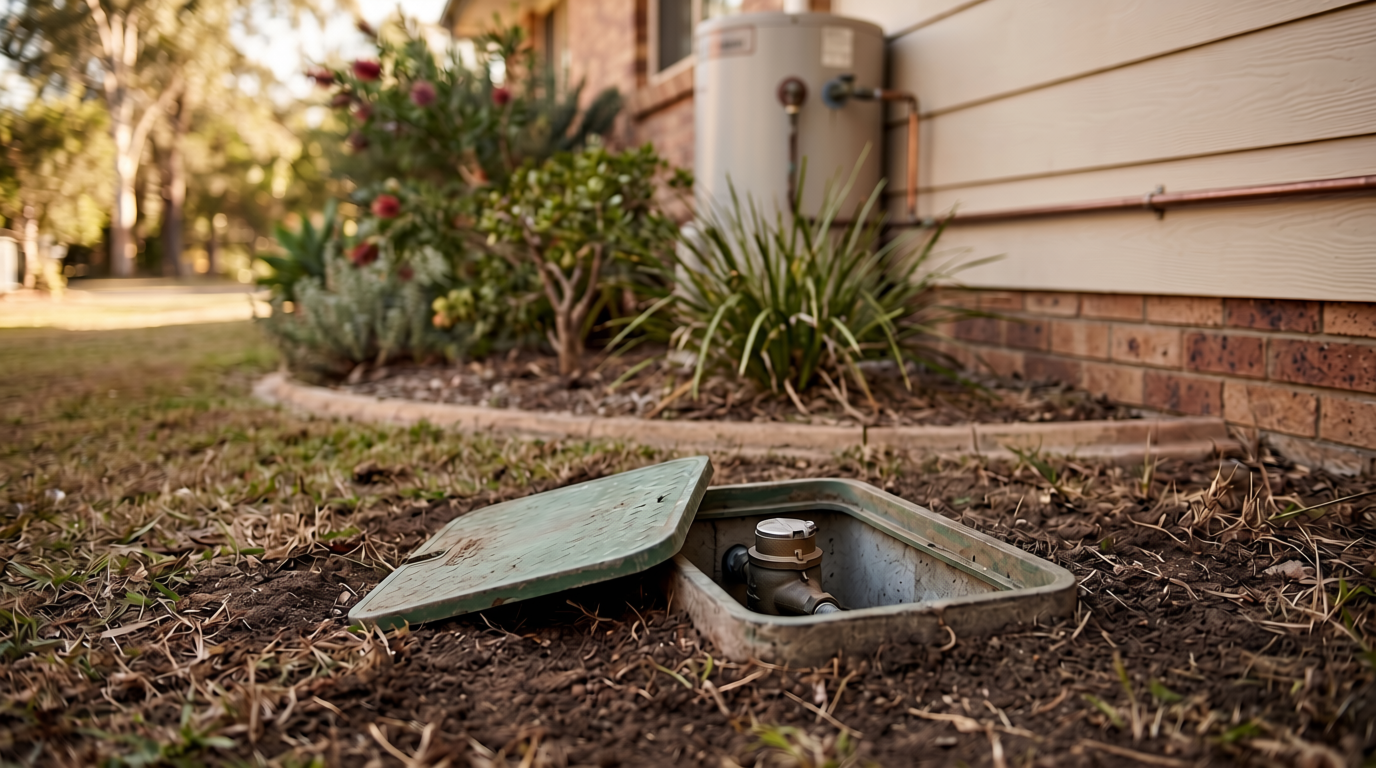
Most homes in Queensland have a pressure limiting valve (PLV) fitted to the main supply line, which is supposed to reduce incoming pressure to a safe level. The problem is that PLVs have a lifespan of roughly 10 to 15 years. A failed or absent PLV means your pipes may be running at full mains pressure without you knowing it.
High pressure also causes or worsens water hammer, accelerates wear on tap washers and appliance fittings, and increases the stress on hot water system components.
Prevention: A licensed plumber can test your mains pressure in a few minutes with a gauge on an outdoor tap. If it’s running high, a new or recalibrated PLV is a relatively minor and inexpensive fix compared to what failed pipework costs. If you’re regularly replacing tap washers or your appliances seem to wear quickly, high pressure may be the reason.
3. Water Hammer
If your pipes knock, bang, or thud when you turn off a tap quickly, that sound has a name: water hammer.
What you’re hearing is a pressure spike. When fast-moving water is stopped suddenly, the kinetic energy has nowhere to go and creates a shockwave through the pipe. A single event isn’t catastrophic, but repeated water hammer over years causes cumulative fatigue at joints and fittings.
Prevention: The fix depends on the cause. It might be securing loose pipes, installing hammer arrestors, or addressing underlying pressure issues, but it’s almost always straightforward and inexpensive. We cover water hammer in more detail in our guide here.
4. Tree Root Intrusion
Underground supply lines run from the street to your home through soil that tree roots are actively exploring for moisture. Established trees, particularly figs, eucalypts, willows, and other species with aggressive root systems, will find their way to a water source if the conditions are right.
Roots don’t burst pipes suddenly. They work their way into existing cracks or loose joints, then expand as they grow, gradually widening the opening. Many homeowners first notice a drop in water pressure or unexplained soggy patches in the yard before any obvious burst occurs.
Root intrusion is one of those plumbing problems that’s harder to detect than internal pipe failures because there’s nothing to see at the surface until it’s well advanced.
Prevention: If you have large established trees within several metres of your supply line or boundary connection, it’s worth having the underground pipework inspected periodically. CCTV inspection of underground lines is the only reliable way to assess root intrusion. If roots have already found your pipes, the earlier you deal with it the better. Read more here on what to plant (and avoid) near drains and pipes.
5. Poor Installation or Previous Repair Work
Not every burst pipe is about age or environmental stress. Some pipes fail because they were never installed correctly in the first place or because a previous repair was a temporary patch that was treated as a permanent fix.
In older homes that have changed hands several times, it’s not uncommon to find evidence of multiple generations of repair work, some of it done properly and some not. A single burst in this context can be hard to evaluate without knowing what else has been done to the system.
Prevention: If you’re buying an older Ipswich property, a plumbing inspection before settlement is worth the cost. If you’ve owned the home a while and know it’s had work done over the years, an assessment might also reveal hidden problems before they get worse. One visit now is far cheaper than discovering the extent of the problem mid-flood.
6. Physical Damage
Occasionally a burst pipe has nothing to do with age, pressure, or roots. Someone drilled into the wrong spot during a renovation. A fence post went through an underground line. A vehicle drove over a section of buried pipe and fractured it.
Physical damage bursts are often obvious in retrospect in that you usually know exactly what work was done in the area. But sometimes the damage is minor enough that the pipe holds for weeks or months before the compromised section finally gives way, by which point the connection to the original cause is no longer obvious.
Prevention: Before any drilling, digging, or ground-disturbing work near the house, it’s worth checking where your supply line runs. If you’re unsure, a plumber can trace it before work starts.
Why One Burst Pipe Often Means More Are Coming
If the cause of your burst was systemic, like old pipes or chronic high pressure, then the burst that just happened wasn’t a random event. It was the weakest point failing first.
The rest of the system is under the same stress.
Patching the burst and moving on without addressing the underlying cause means you’re likely to be back here again, possibly soon. A broader assessment of your plumbing system helps you understand what you’re dealing with so you can decide whether to repipe now or monitor and plan.
Our CCTV pipe inspections and leak detection services both feed into that picture. Neither requires excavation and neither takes long, but both give you a clear answer rather than a guess.
Worried About Your Plumbing?
If you’ve had a burst recently and want to understand what caused it, or if your home is older and you’d rather know the state of your pipes before something fails, get in touch with our team online or call 07 3177 2019.
We’ll give you a straight answer and a clear picture of what, if anything, needs to be done.
Dan Parker is the Director of Parker Plumbing and has over 16+ years of experience in the plumbing industry. His commitment to providing exceptional customer service means that he has seen it all – anything to do with residential or commercial plumbing, he knows what to do. Passionate about helping people in his community, Dan strives to offer honest and reliable plumbing services in the Brisbane and Ipswich areas.